Depression
Depression has been described as a kind of emotional numbness.
A person may feel he or she has no laughter or joy inside because
these positive emotions have been blocked by unhappy memories.
Old emotional hurts inevitably lurk inside and when the new feelings
try to bubble up they are filtered through these hurts. Even the
most beautiful experience cannot survive if it is being filtered
through a preexisting feeling of hopelessness, fear or anxiety.
How Do We Become Depressed?
Basically we are aroused by only two sensations, pain and pleasure.
We all want to avoid pain and pursue pleasure. The emotional cycle
which leads to depression begins in the present with our initial
experience of pain or pleasure, and ends with complex feelings
which are "remembered" exclusively
in the past. This cycle of emotions has been found by psychiatrists
to follow this pattern:
- Pain in the present is experienced as hurt.
- Pain in the past is remembered as anger.
- Pain in the future is perceived as anxiety or fear.
- Unexpressed anger, redirected against yourself and held
within, is experienced as guilt.
- The depletion of energy that occurs when anger is redirected
inward creates depression.
Hurt is stored because the body retains a primitive subconscious
ability to remember every incident that it experiences. This is
called conditioning and is part of the way we learn.
Although many people are treated with anti depressant drugs, these
medications do not cure the underlying hurt or sadness that is
the true cause of the depression. When the medication is taken
away the depression usually reappears.
Even though it can take longer and requires greater insight and
courage, a depressed person can either release the inner hurt or reprogram
it. He/She can learn new, more useful and effective responses
to painful experiences. When this is accomplished a permanent
cure usually results.
In the Life Skills Seminar you learn to overcome depression by understanding and practising:
- The conscious ability to relax and release stress any time,
anywhere.
- The ability to focus the mind.
- The ability to neutralise or reprogram subconscious "hurt
memories".
- The ability to develop mind/body exercises to overcome depression.
- The ability to develop new responses to current experiences.
You May Ask "How Effective Is What You Teach?"
How about I let some of my seminar participants explain that
to you?
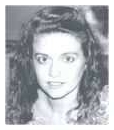 Dear Sandy,
So much has happened in the 12 months in my life when I felt everything
had ground to a halt and there was no hope of anything changing.
I was trying to recover from a major depression, I weighed 12
stone, my marriage was in a bad state and I felt I had no future.
I decided to try the methods you taught even though I was a little
sceptical. The goal I set at the seminar was about releasing weight.
Now 12 months later, I'm 3 stone lighter. As the weight began
to go, I started using Alpha to get through difficult day to day
situations and to relax in general. As I became more relaxed,
I was able to think more clearly about what I wanted and started
to set and achieve goals. I don't want it to sound like the CALM
Seminar instantly solved all my problems. I still battle depression
on a daily basis and my marriage though much more secure and happy
still has problems. The greatest difference is that now these
'problems' don't totally overwhelm me. I feel I have the tools
I need to tap into my own power and deal with things as they happen.
I can see that things can change and that I now have the power
to change the way I act and feel when confronted by problems.
Instead of problems running my life, I feel in control again and
therefore have a future. Thank you Sandy
Erika Gelzinnis, NSW
Cathy's Story
Cathy attended the seminar and told me that she had not come
for herself but had come totally for her mother who was so ill
that she was unable to attend herself. At the end of the seminar
I asked her how things were and she told me she didn't care what
happened to her, even if a truck ran over her on the way home.
She told me she had clinical depression and she was stuck with
it. She had come here only to see what she could do for her mother.
When she got home she started to teach her mother what to do and
what she had learnt.
Very soon after that Catherine had to have a mammogram and the
result wasn't good. She was told she had a big lump in her left
breast and had to go into hospital in three days time.
She asked if it would hurt because she had a low pain tolerance
and feared pain. They said it would. She would have to have a
wire inserted into the breast, to the lump, without anaesthetic
so that the doctor could follow it to the lump. The wire had to
penetrate about three inches. Once the lump was located Cathy
would receive an anaesthetic. She thought she may as well try
the Peaceful Place method - even though she didn't believe it
would work for her. She had nothing to lose.
For the next few days, a hundred times each day, she visualised
that the wire was inserted easily and painlessly, just like a
spoon into yoghurt and affirmed "this feels great". She imagined
the lump was cut out painlessly, with a successful outcome. After
she had done the visualisation for about a day she thought, "I
know what I'm going to do. I'm going to put all my sadness, pain,
injustice, anger and bitterness that led to my depression, into
this lump and as the lump gets cut out it's going to free me of
all my depression and I'm going to feel absolutely fantastic."
So it all happened as she visualised. It was not, however, until
the wire was painlessly inserted did Catherine actually believe.
BUT, before that moment, she pretended really well. When the wire
was inserted it didn't hurt at all and the lump turned out to
be benign.
Not only that, but she came to another one of my seminars recently.
She is a different woman, glowing, happy, the depression completely
gone! She said, "I've been diagnosed as having clinical depression
for years, but now it's worked so well for me. I know how powerful
it is and I'm working with the Peaceful Place techniques all the
time. It's just a question of attitude and how you talk to yourself."
Cathy has been an inspiration to many people suffering from
depression. She's really willing to help individuals by talking
to them and sharing her experiences. Thanks Cathy for letting
me share your inner strength.
So What is the Next Action Step that You Can Take?
CALM makes suggestions on how you can develop your skills in dealing with Depression using Sandy MacGregor's low cost Tapes, Books, CDs, Videos and Seminars which have been utilised by thousands of people successfully since 1990. [click here]